
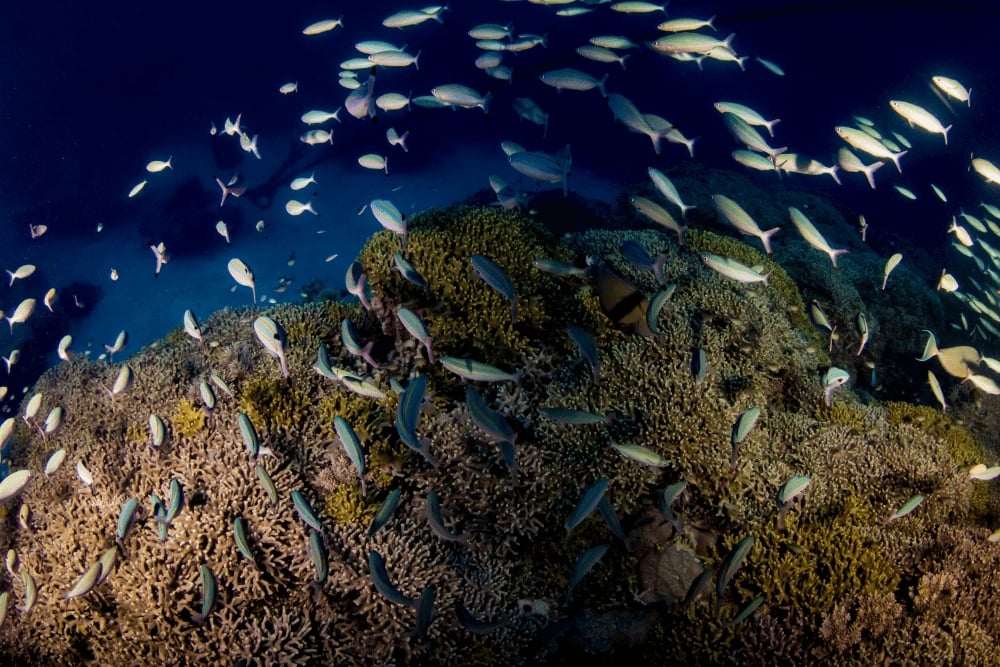





Norman Reef is one of the outstanding Outer Great Barrier Reef locations accessible from Cairns, combining shallow coral gardens, clear tropical water and spectacular underwater terrain for snorkellers and scuba divers.
Located approximately 70 kilometres offshore, Norman Reef lies towards the outer edge of the Great Barrier Reef’s continental shelf. Its position and varied reef structure create an underwater landscape of coral gardens, bommies, walls, drop-offs, caves and swim-throughs.
For snorkellers, sections of coral rise close enough to the surface to provide beautiful views into the reef below.
For scuba divers, Norman Reef opens into an entirely different environment.
Descend beneath the surface and coral gardens become walls. Bommies rise from deeper water. Crevices and caves create shelter for marine life, while some locations fall away towards the deeper blue water beyond the reef.
Norman Reef demonstrates beautifully why there isn’t just one way to experience the Great Barrier Reef.
What Makes Norman Reef Special?
Variety is one of Norman Reef’s defining characteristics.
Within the same reef system are shallow coral environments, deeper walls, drop-offs, caves and swim-throughs.
There is even a small wreck at one of Norman Reef’s dive sites.
This variation creates habitat for an equally diverse community of marine life.
Tropical reef fish occupy the coral gardens.
Turtles feed around suitable reef habitat.
Reef sharks patrol deeper sections and sandy areas.
Giant clams live among the coral, while moray eels, nudibranchs and countless smaller animals can reward visitors who take the time to look carefully.
In favourable conditions, underwater visibility at Norman Reef can reach around 30 metres. As always, actual visibility varies with weather, tides and conditions on the day.
Snorkelling at Norman Reef
You don’t need to scuba dive to appreciate Norman Reef.
Its shallow coral gardens can provide excellent snorkelling, allowing visitors to float above the reef and observe the marine community from the surface.
When conditions are clear and sunlight penetrates the water, the colours and structure of the reef become particularly apparent.
Look for butterflyfish moving between coral heads.
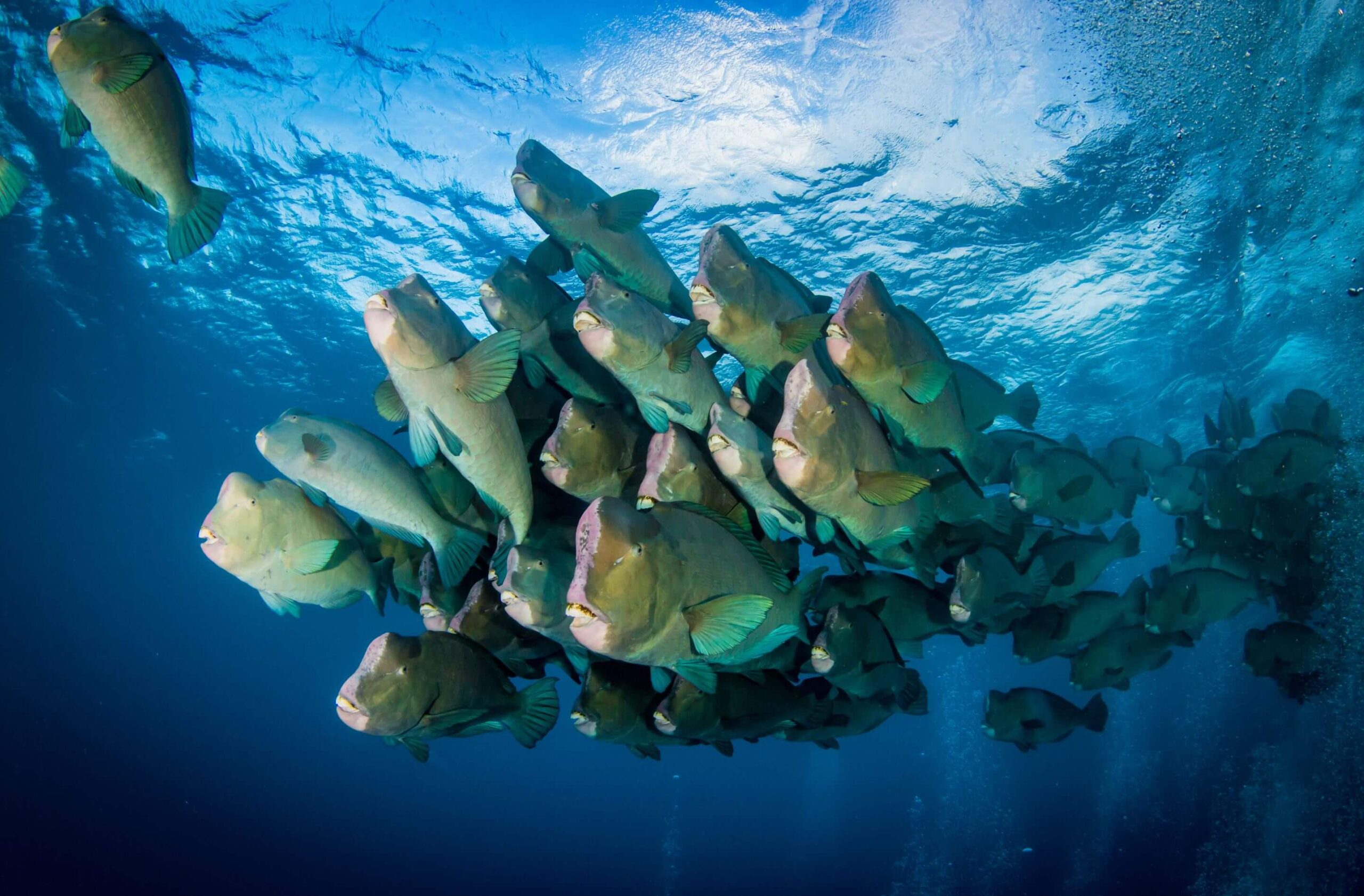
Parrotfish graze across the reef.
Small damselfish hover close to shelter.
Anemonefish remain close to their host anemones.
And occasionally something much larger appears.
A turtle may glide across the reef.
A Maori wrasse may emerge from the blue.
A reef shark might cruise quietly through deeper water.
Don’t measure a good snorkel by how far you swim.
Sometimes the best place on Norman Reef is the patch of coral directly beneath you.
Stop, float and watch.
Scuba Diving at Norman Reef
For scuba divers, Norman Reef offers considerably more than shallow coral gardens.
The reef contains walls, drop-offs, caves, bommies and swim-throughs, creating opportunities for divers with different levels of experience.
The change in depth also changes what you can see.
Close to the reef, look beneath ledges and into crevices for smaller marine life.
Around bommies, schools of fish may gather.
Along deeper edges, occasionally turn away from the coral and look into open water.
Larger animals often travel along reef margins rather than through the shallow coral garden itself.
Norman Reef rewards divers who explore slowly.
There is no need to cover enormous distances.
A single bommie can contain enough life to occupy an entire dive.
Dive Sites at Norman Reef
Norman Reef isn’t one dive site.
It contains numerous individual locations, each revealing a different part of the larger reef system.
Recognised Norman Reef sites include Caves, The Nursery, Plate Top, Troppos and Turtle Bay. Other established locations include Bob’s Bommie, Shark Mountain, Playground, Wild Side, Wild Side Clipper and Alan’s Wall.
That diversity matters.
Someone snorkelling at Norman Reef may experience shallow coral gardens.
A certified diver at another mooring could be exploring a wall or bommie.
A night diver may encounter a completely different community again.
They are all experiencing Norman Reef, but not necessarily the same Norman Reef.
Shark Mountain
Shark Mountain is one of Norman Reef’s particularly distinctive dive locations.
The site centres around a large bommie that can be circled by divers. A small wreck lies against the structure at approximately 10–14 metres, with remnants of its steelwork and engine still visible. Reef sharks are regularly associated with the location.
The combination of coral, fish life, sharks and a small wreck creates an unusually varied dive.
But the name shouldn’t make visitors think Norman Reef is somehow dominated by sharks.
Reef sharks are simply one part of the ecosystem.
Seeing one moving naturally through its own habitat can be one of the most memorable experiences of a Great Barrier Reef dive.
Turtle Bay
The name Turtle Bay provides a good indication of why this part of Norman Reef is special.
It is an established feeding area for green sea turtles, with other smaller marine creatures including shrimp, crabs and blennies also recorded around the site.
A turtle encounter should always happen on the animal’s terms.
Don’t chase it.
Don’t touch it.
And never block its route towards the surface. Sea turtles breathe air and must always be able to surface freely.
Stay still and watch.
Often the best wildlife encounters happen when we stop trying to create them.
Plate Top
Plate Top provides another Norman Reef environment.
The site is particularly rich in reef fish, with anthias, barracuda, anemonefish, gobies, sweetlips, trevally and coral trout among the species recorded there.
The diversity illustrates an important point about coral reefs.
Fish aren’t distributed randomly.
Different species occupy different habitats according to shelter, feeding opportunities, water movement and relationships with other organisms.
Look carefully at one section of reef and you begin to see those relationships.
The Great Barrier Reef becomes much more interesting when you stop seeing “lots of fish” and start seeing a community.
Alan’s Wall
Alan’s Wall shows Norman Reef’s more dramatic side.
The site features crevices and swim-throughs alongside a substantial wall descending to around 18 metres. Shallower bays on either side also provide areas suitable for snorkelling.
For divers, a reef wall creates a completely different perspective from a shallow coral garden.
Instead of looking down, you can move alongside the reef.
Coral and marine life occupy different depths.
Open blue water lies behind you.
And the reef itself becomes a vertical landscape.
Playground and Night Diving
Norman Reef can also provide excellent night-diving experiences on liveaboard itineraries.
The site known as Playground is used as an overnight mooring, where divers may see reef sharks moving through the illuminated water after dark. Queensland grouper and eagle rays have also been recorded around the site.
Night changes a coral reef.
Animals hidden during daylight emerge.
Other species settle down to rest.
The beam of a dive torch reveals only one small section at a time, making even a familiar site feel completely different.
A reef never really switches off.
Its inhabitants simply change shifts.
Coral at Norman Reef
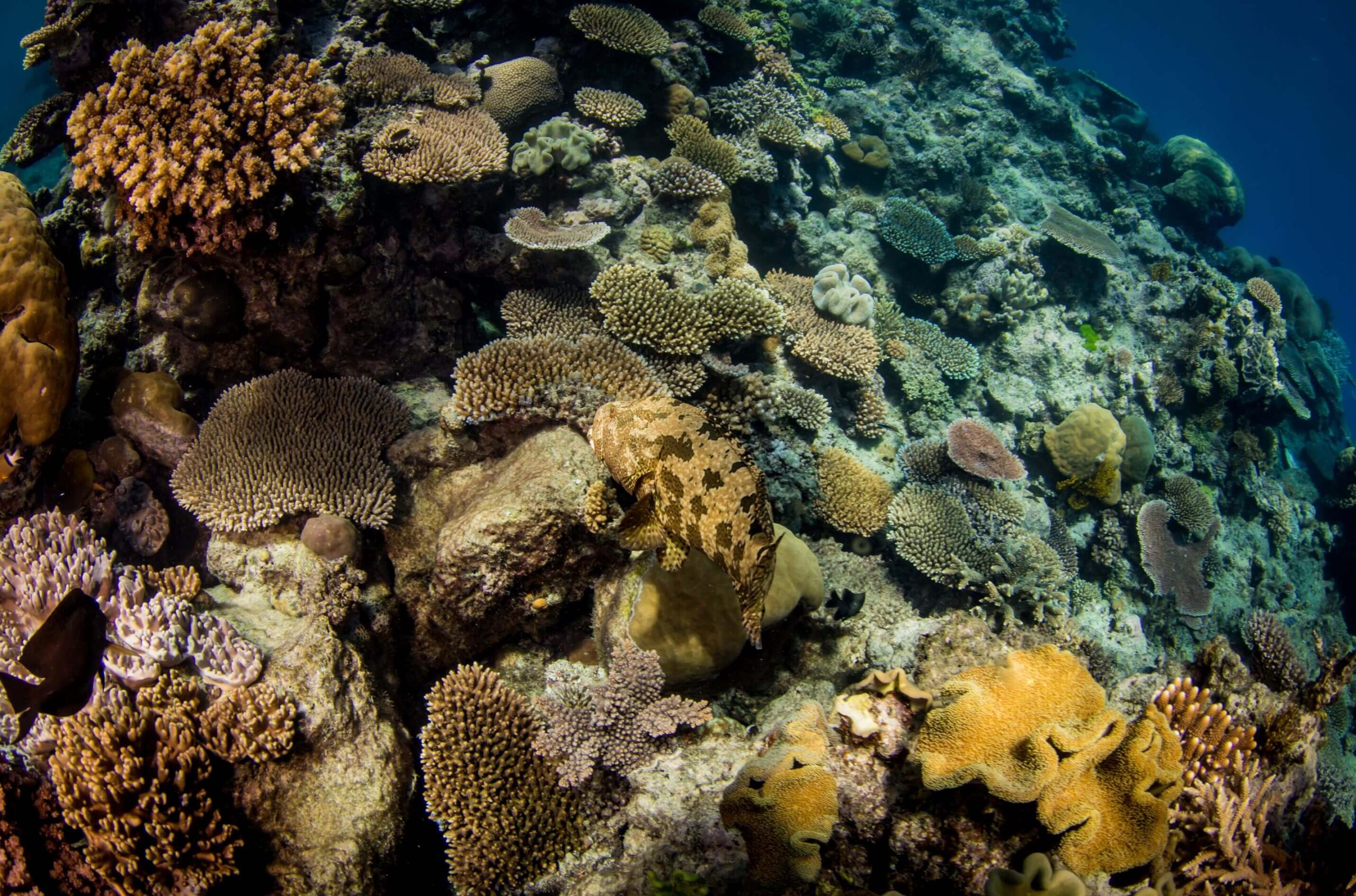
Norman Reef supports an impressive variety of coral.
Recorded coral groups include staghorn, brain, plate and soft corals, alongside larger coral structures and bommies.
Each growth form contributes something different to the reef.
Branching staghorn coral creates intricate shelter for smaller fish.
Plate corals form horizontal structures.
Large rounded corals can become substantial features in their own right.
Soft corals add movement and different textures to parts of the underwater landscape.
But coral isn’t simply the background to the animals people come to see.
The coral creates the habitat that makes much of that life possible.
Marine Life at Norman Reef
Norman Reef supports an extraordinary variety of Great Barrier Reef marine life.
Visitors may encounter clownfish, parrotfish, butterflyfish, angelfish, triggerfish, barracuda, giant trevally, surgeonfish and other tropical reef species.
Green and hawksbill turtles inhabit the reef.
Whitetip and blacktip reef sharks may be encountered.
Giant clams live among the coral.
Moray eels hide within crevices, while nudibranchs reward anyone willing to slow down and search for the reef’s smaller inhabitants.
No individual sighting should ever be guaranteed.
This is a natural ecosystem.
The animals decide whether you see them.
Maori Wrasse
Large Maori wrasse are another memorable inhabitant associated with Norman Reef.
These substantial reef fish can be surprisingly curious around divers and snorkellers.
Their size makes them impressive, but spend a little time watching one and their behaviour can be just as interesting as their appearance.
As with every wild animal, don’t pursue or attempt to touch them.
Let the fish determine the encounter.
A photograph is better when the animal chose to be there.
Giant Clams
Giant clams are among Norman Reef’s quieter wonders.
Their brightly patterned mantles may display blues, greens, browns and other intricate colour combinations.
They also contain microscopic algae within their tissues. The algae photosynthesise using sunlight, contributing energy to the clam in a remarkable biological partnership.
It is another example of the connections that hold coral reef ecosystems together.
A giant clam isn’t simply living on the reef.
It is part of the reef community.
Reef Sharks
Whitetip and blacktip reef sharks are among the sharks that may be encountered at Norman Reef.
For someone snorkelling the Great Barrier Reef for the first time, the idea of seeing a shark can sound intimidating.
Actually observing one in its natural environment can produce a very different reaction.
Reef sharks often move calmly through the water, following the reef edge or passing beneath snorkellers.
Give them space.
Don’t chase them.
And appreciate the opportunity to observe an important reef predator behaving naturally.
Is Norman Reef Good for Beginners?
Norman Reef can provide excellent environments for people experiencing the Great Barrier Reef for the first time.
Its shallow coral areas are suitable for snorkelling when conditions permit, while Cairns operators visiting Norman Reef cater for snorkellers as well as introductory and certified divers.
The important factor is the specific site and conditions on the day.
If you’re not a confident swimmer, tell the crew before entering the water.
Use flotation equipment.
Ask for assistance.
You don’t need to be an athlete to appreciate the reef.
Once you’re comfortable, slow down and look beneath you.
That’s where the experience begins.
Norman Reef for Certified Divers
Certified divers can explore much more of Norman Reef’s three-dimensional landscape.
Walls, deeper bommies, swim-throughs, caves and drop-offs provide opportunities beyond the shallow reef visible from the surface.
Good buoyancy control matters.
Keep fins, gauges and other equipment clear of coral.
Move slowly enough that you don’t need to grab the reef for stability.
And don’t become so focused on covering distance that you miss what is directly beside you.
A good reef dive isn’t measured in metres travelled.
Where is Norman Reef?
Norman Reef lies approximately 70 kilometres offshore from Australia’s east coast, on the outer edge of the Great Barrier Reef’s continental shelf.
It sits within a group of important Outer Reef locations accessible from Cairns.
Nearby reef experiences include Saxon Reef and Hastings Reef, while the broader Cairns reef network includes Flynn Reef, Milln Reef, Thetford Reef, Pellowe Reef, Breaking Patches, Moore Reef, Michaelmas Cay and Upolu Cay.
Together these locations demonstrate something we think every visitor should understand:
There isn’t one single place called “the Great Barrier Reef”.
It is an enormous living system composed of thousands of individual reefs and associated habitats.
Norman Reef is one of them.
Norman Reef or Saxon Reef?
Visitors researching Cairns reef tours will often see Norman Reef and Saxon Reef listed together.
Both provide excellent snorkelling and diving, but they are distinct reef systems with different individual sites and underwater topography.
Norman has particularly varied terrain, including walls, drop-offs, caves, swim-throughs and numerous established moorings.
Saxon offers its own coral gardens, bommies and reef environments.
There isn’t a universally better choice.
Conditions matter.
On one day Norman may provide the preferred experience. On another, Saxon or Hastings may offer more favourable conditions.
This is why experienced reef operators select locations according to factors such as weather, water clarity and sea conditions.
When is the Best Time to Visit Norman Reef?
The Great Barrier Reef can be experienced from Cairns throughout the year.
There is no month when Norman Reef is guaranteed to have 30-metre visibility, flat seas and perfect sunshine.
Wind, tides, currents and recent weather all influence conditions.
The weather offshore can also be different from conditions in Cairns.
Rather than becoming fixated on one particular date or forecast symbol, understand that experienced crews work with the reef conditions they encounter.
If visiting Norman Reef specifically matters to you, check whether your chosen tour includes it among its possible locations.
Protecting Norman Reef
Norman Reef is a living ecosystem.
Treat it as one.
Never stand on coral.
Don’t deliberately touch it.
Maintain good buoyancy when scuba diving.
Give turtles, sharks, rays and other animals enough room to behave naturally.
Don’t chase wildlife for photographs.
And never remove coral, shells or marine organisms from the reef.
The principle is uncomplicated:
Take the experience with you. Leave the reef where it belongs.
Experience Norman Reef from Cairns
Norman Reef can be experienced on selected Great Barrier Reef tours departing from Cairns, with opportunities for snorkelling, introductory diving and certified scuba diving depending on the operator and itinerary. Current Cairns reef itineraries include Norman among the Outer Reef locations selected according to conditions.
If Norman Reef specifically is important to you, check the individual tour’s reef locations before booking, because the final sites visited can depend on weather, water clarity and operational conditions.
And if Norman is where your day takes you, don’t hurry through it.
Float above the shallow coral gardens.
Watch a butterflyfish disappear between coral heads.
Look for a turtle feeding quietly around the reef.
If you’re diving, descend beside a wall, explore around a bommie or look back through a swim-through towards the blue water beyond.
You are not simply looking at coral.
You are visiting a living landscape created over generations by countless organisms.
And the longer you spend looking at Norman Reef, the less it feels like scenery and the more it becomes a community.




Reviews
There are no reviews yet