
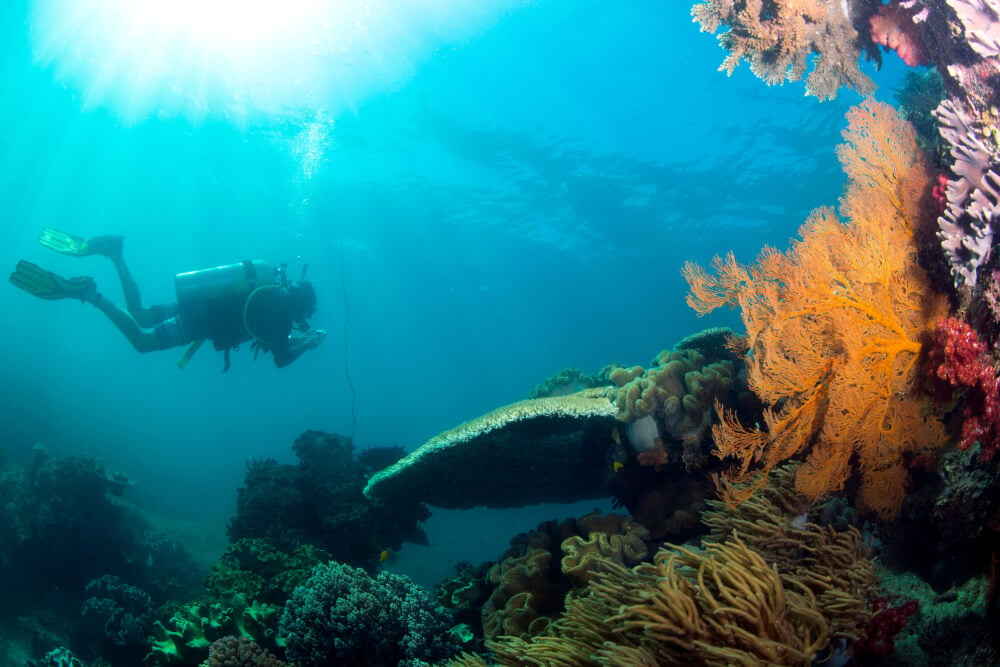
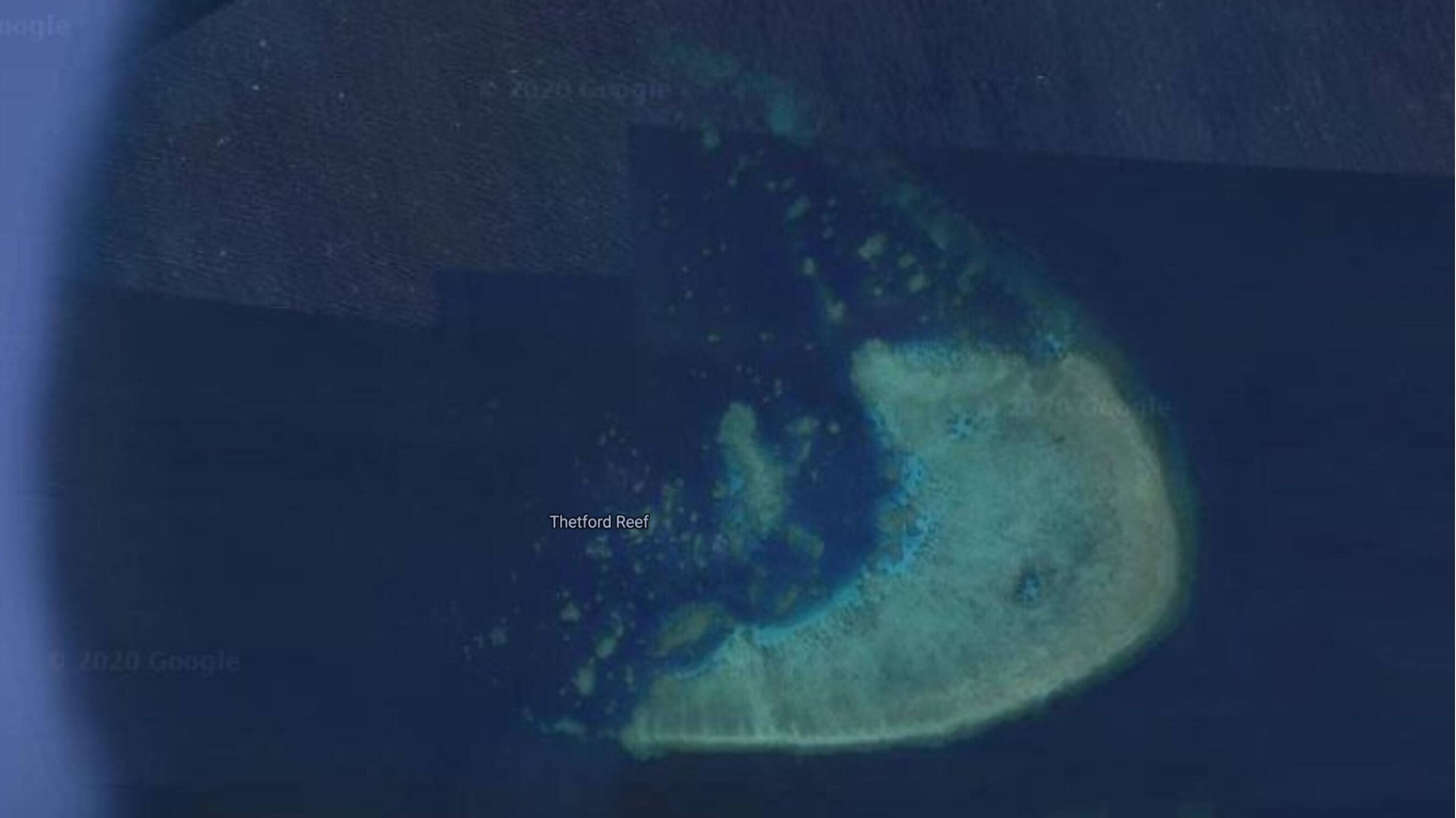
Thetford Reef is a beautiful Great Barrier Reef location accessible from Cairns, known for colourful coral gardens, tropical fish and varied underwater landscapes that can be explored by both snorkellers and scuba divers.
Located on the Great Barrier Reef offshore from Cairns, Thetford Reef forms part of an extraordinary network of individual reef systems visitors can experience from Tropical North Queensland.
And that distinction matters.
The Great Barrier Reef isn’t one continuous reef. It is a vast ecosystem made up of thousands of individual reefs and hundreds of islands and cays, each with its own underwater terrain, coral communities and marine life.
Thetford Reef is one of those individual worlds.
Its shallow coral gardens make it appealing for snorkelling, while deeper reef areas provide scuba divers with walls, bommies and more complex underwater terrain to explore.
What Makes Thetford Reef Special?
Thetford Reef offers the combination many visitors hope to find on a Great Barrier Reef trip: shallow coral, abundant tropical fish and deeper areas for scuba diving.
Its reef structure creates numerous habitats within a relatively small area.
Coral gardens provide shelter for smaller reef fish. Larger bommies create three-dimensional underwater structures, while reef edges transition towards deeper water where different marine species may be encountered.
For visitors, that means Thetford Reef can provide very different experiences depending on whether you stay at the surface with a snorkel or descend beneath it on scuba.
It also means there is no single view that defines the reef.
You have to explore it.
Snorkelling at Thetford Reef
Snorkelling is one of the simplest ways to discover Thetford Reef.
Where coral rises towards the surface, snorkellers can float above the reef and look down across coral gardens filled with tropical fish.
Your first instinct may be to swim continuously.
Don’t.
Some of the best reef experiences happen when you simply stop.
Float above a coral formation and watch the activity below. Butterflyfish move between coral heads. Small fish disappear into branching coral. Schools of fish may pass across the reef while larger animals occasionally emerge from deeper water.
The longer you look, the more complex the reef becomes.
For people experiencing the Great Barrier Reef for the first time, that moment — putting your face beneath the water and seeing an entire living landscape below — can be unforgettable.
Scuba Diving at Thetford Reef
Scuba diving reveals another dimension of Thetford Reef.
Once beneath the surface, divers can explore the reef vertically rather than simply looking down from above.
Coral formations become walls and structures to move around. Bommies rise from deeper water. Sandy sections separate coral habitats, while reef edges create opportunities to watch marine animals moving between shallow and deeper areas.
Certified divers can spend time examining the reef’s smaller details as well.
Look beneath ledges and around coral heads rather than concentrating only on large animals.
Some of the Great Barrier Reef’s most remarkable creatures are also some of its smallest.
Coral Gardens at Thetford Reef
Coral is what gives Thetford Reef its physical structure.
The reef supports a mixture of hard coral formations, with different growth forms creating habitat for different animals.
Branching corals provide intricate shelter for small fish.
Large rounded corals form substantial structures that may have been growing for many years.
Plate and table-shaped corals create horizontal layers across sections of reef.
Your photograph illustrates this beautifully.
The butterflyfish aren’t simply swimming past attractive scenery. They are moving through their habitat.
The relationship between coral and marine life is fundamental to understanding the Great Barrier Reef.
The coral is alive, and the community around it depends upon it.
Butterflyfish at Thetford Reef
Butterflyfish are among the most recognisable tropical fish visitors may encounter on the Great Barrier Reef.
Their compressed bodies, striking patterns and contrasting colours make them easy to notice among coral gardens.
Many butterflyfish species have close relationships with coral reef habitats. Depending on the species, they may feed on coral polyps, small invertebrates or other food associated with the reef.
They are often seen in pairs moving methodically across coral formations.
Rather than chasing them, stop and watch.
Their behaviour can tell you something about how closely reef fish and coral habitats are connected.
Marine Life at Thetford Reef
Thetford Reef supports the diverse marine community expected of a tropical Great Barrier Reef environment.
Visitors may encounter butterflyfish, angelfish, parrotfish, wrasse, damselfish, fusiliers and schools of other tropical reef fish.
Larger animals such as turtles, rays and reef sharks may also move through reef environments.
Look more closely and another world appears.
Small crustaceans, molluscs and other invertebrates occupy spaces within and around the coral. Tiny fish shelter between coral branches, while cleaner fish establish stations visited by larger animals.
Wildlife encounters naturally vary.
Nothing on a wild reef should be treated as guaranteed.
That’s part of the attraction.
Every time you enter the water, the reef decides what it will show you.
Is Thetford Reef Good for Snorkellers?
The shallow sections of Thetford Reef can make it a rewarding location for snorkelling when conditions are suitable.
You don’t need to dive to appreciate coral diversity or tropical marine life.
In fact, shallow coral can sometimes provide snorkellers with particularly good colour because sunlight remains strong close to the surface.
Conditions are important, however.
Wind, waves, currents and tides all influence the experience on a particular day. Follow crew instructions and tell them before entering the water if you’re not a confident swimmer.
Using flotation equipment can make snorkelling considerably more comfortable.
There is no benefit in struggling unnecessarily.
The objective is to relax enough to actually enjoy what is beneath you.
Is Thetford Reef Good for Divers?
Thetford Reef provides opportunities for scuba divers to experience parts of the reef inaccessible from the surface.
Divers can explore deeper coral formations, reef edges and bommies while spending more time observing marine life at depth.
For newer divers, exploring a tropical coral reef can provide an entirely different experience from training environments.
For experienced divers, the pleasure often lies in slowing down.
Look beneath coral overhangs.
Check sandy areas.
Examine individual coral heads.
A reef that initially appears to be one enormous landscape becomes hundreds of smaller habitats when viewed carefully.
Thetford Reef for First-Time Visitors
Thetford Reef can provide a memorable introduction to the Great Barrier Reef.
If this is your first time snorkelling, don’t feel that you need to travel far from the vessel or keep pace with experienced swimmers.
Take your time.
Listen carefully to the safety briefing, use flotation equipment if it helps and ask the crew for assistance when needed.
Once you become comfortable in the water, your attention can move away from swimming and towards the reef.
That is when the experience really begins.
Where is Thetford Reef?
Thetford Reef lies within the Great Barrier Reef Marine Park offshore from Cairns in Tropical North Queensland.
It forms part of the network of offshore reef systems reached by selected reef vessels departing from Cairns.
Other reef locations accessible from Cairns include Milln Reef, Flynn Reef, Pellowe Reef, Norman Reef, Saxon Reef, Hastings Reef and Breaking Patches.
Each reef has its own characteristics.
Milln Reef is known for sites such as Three Sisters and Whale Bommie.
Flynn Reef has numerous established snorkelling and diving locations.
Thetford Reef adds another coral environment to this remarkable collection.
Together, these individual reefs demonstrate the enormous diversity hidden behind the simple phrase “the Great Barrier Reef.”
When is the Best Time to Visit Thetford Reef?
The Great Barrier Reef can be experienced from Cairns throughout the year.
There isn’t one month when Thetford Reef is guaranteed to have perfect conditions.
Wind, tides, currents, cloud cover and recent weather can all influence water clarity and surface conditions.
Importantly, conditions offshore may be different from those experienced in Cairns.
Experienced reef crews take these factors into account when selecting locations for the day’s activities.
If visiting Thetford Reef specifically matters to you, check the individual tour itinerary and remember that reef locations can sometimes change according to conditions.
Protecting Thetford Reef
Every visitor to Thetford Reef has an opportunity to help protect it.
The most important rule is simple:
Look, but don’t touch.
Never stand on coral or use it to steady yourself.
Give turtles, sharks, rays and other animals room to behave naturally.
Don’t chase wildlife for photographs.
Never remove coral, shells or other marine material from the reef.
And listen carefully to environmental instructions provided by your crew.
The reef doesn’t need us to interact with it.
It needs us to experience it responsibly and leave it undisturbed.
Experience Thetford Reef from Cairns
Thetford Reef can be experienced on selected Great Barrier Reef tours from Cairns, with opportunities for snorkelling and scuba diving depending on the vessel and itinerary.
Operators that have access to several reef systems may choose their locations according to weather, tides, water conditions and the activities planned for that day.
Therefore, if Thetford Reef specifically is somewhere you want to experience, check which reef locations your chosen tour may visit before booking.
Once you’re there, take your time.
Look at the coral rather than simply swimming over it.
Watch butterflyfish moving between coral heads.
Look into the blue water beyond the reef edge.
And remember that what you are seeing is just one part of an enormous interconnected ecosystem stretching along Australia’s north-east coast.
Every reef has its own character. Thetford Reef is another part of the Great Barrier Reef story worth discovering.

Reviews
There are no reviews yet